Media framing of Lebanon after Beirut strikes
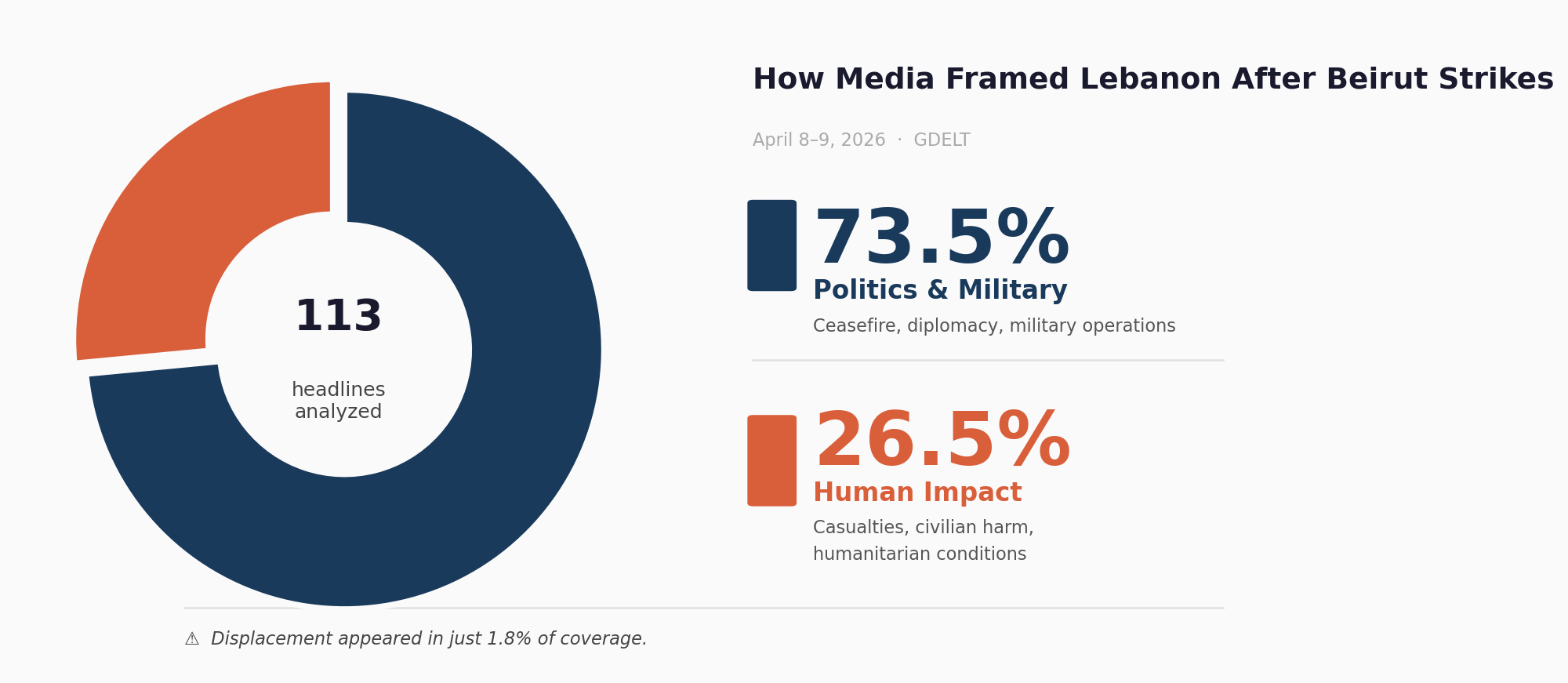
73.5% of media coverage after the Beirut strikes focused on politics, while civilian impact remained limited and displacement was nearly absent.

A computational analysis of English-language media coverage of Lebanon shows that reporting after the April 8 Beirut strikes was overwhelmingly framed as a political and military story rather than a human crisis.
In a dataset of 113 headlines collected over ~48 hours (Apr 8–9, 2026) using the GDELT Project, political and military narratives dominated coverage across outlets and regions.
Human impact—where it appeared—was largely limited to casualty counts, with minimal attention to displacement or civilian conditions.
Key Finding
💡
Nearly 3 out of 4 articles focused on politics, not people after the Beirut strikes. Displacement appeared in just 1.8% of headlines.
Data
📃
The analysis is based on 113 English-language news headlines collected via the GDELT Project (Apr 8–9, 2026). Each headline was manually classified based on its dominant framing: political and military or human impact.
Figure
Full Analysis
Lebanon Coverage Focused on Politics Over Civilians
Analysis of 113 news articles shows coverage emphasized diplomacy and military developments over humanitarian impact following the Beirut strikes.
 Mohamed Soufan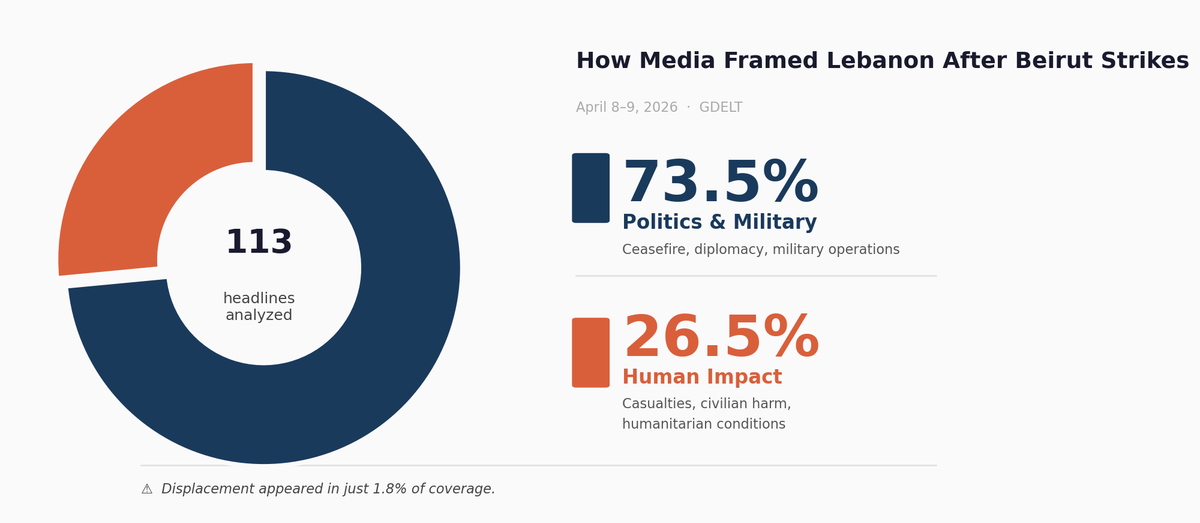
Related Research
X Data: Lebanon Strike Reports 5× Higher Before Ceasefire
Analysis of 5,285 posts on X shows strike reports surged before the ceasefire announcement and remained elevated during it.
Mohamed Soufan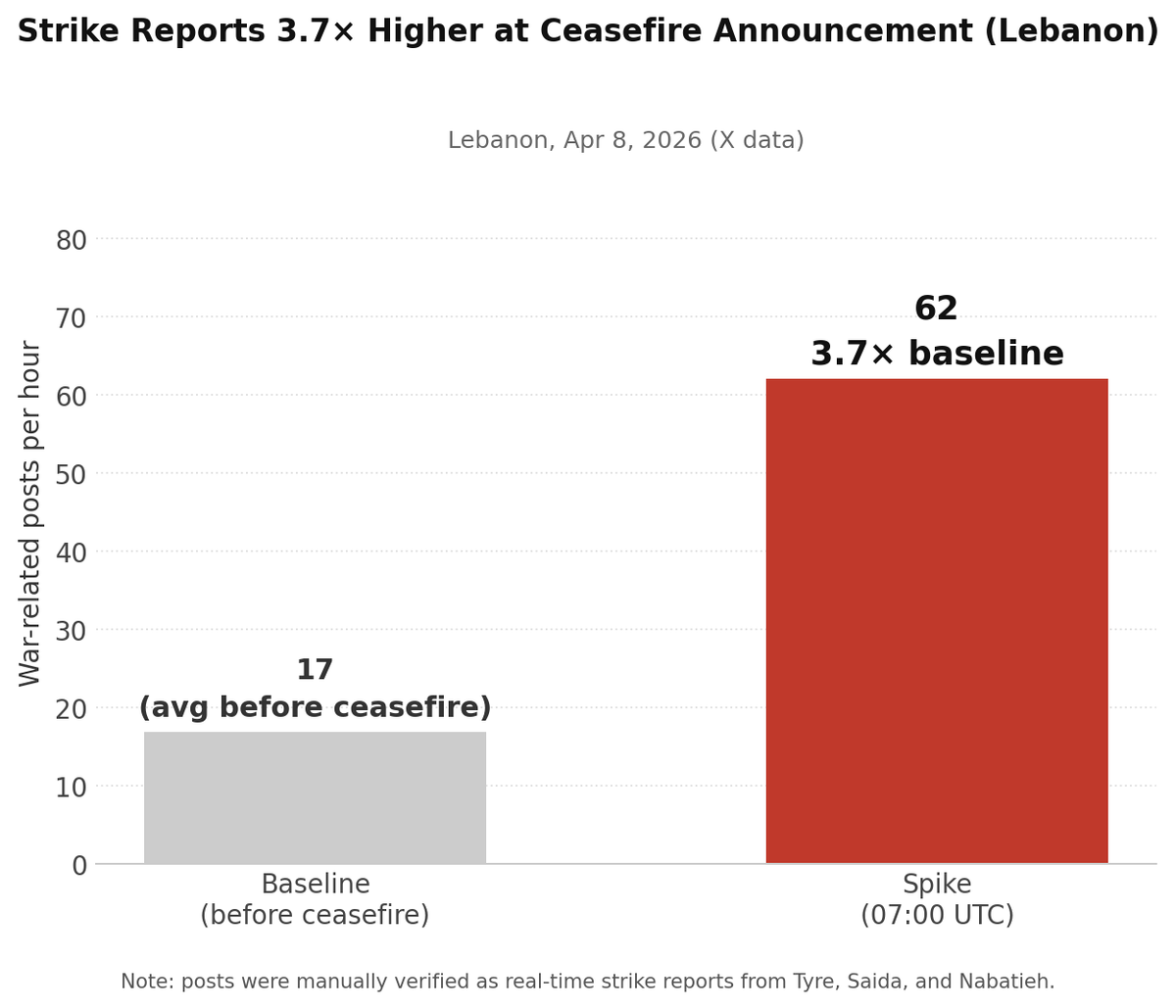
Data and Methodology
The full dataset and analysis code are publicly available on GitHub.