Lebanon Crisis Communications Lacked Concrete Numbers
Analysis of 182 Lebanon crisis communications found that nearly 7 in 10 contained no concrete number. State/ministry sources were the least quantified, with only 6.5% including measurable figures.

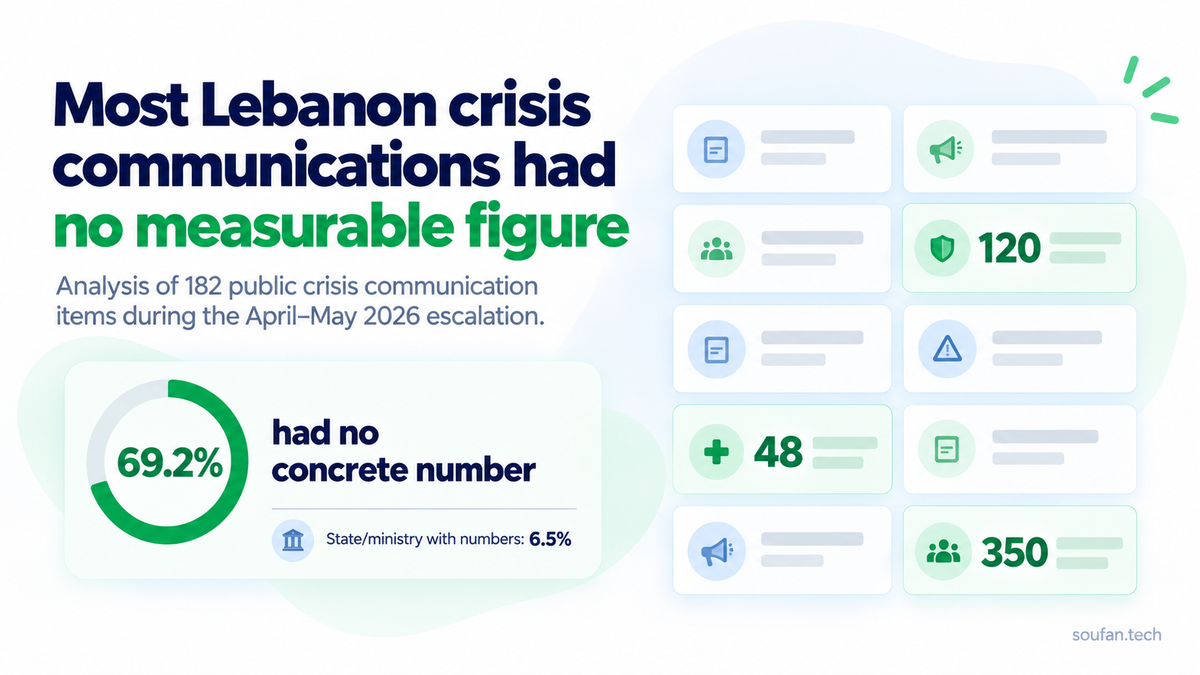
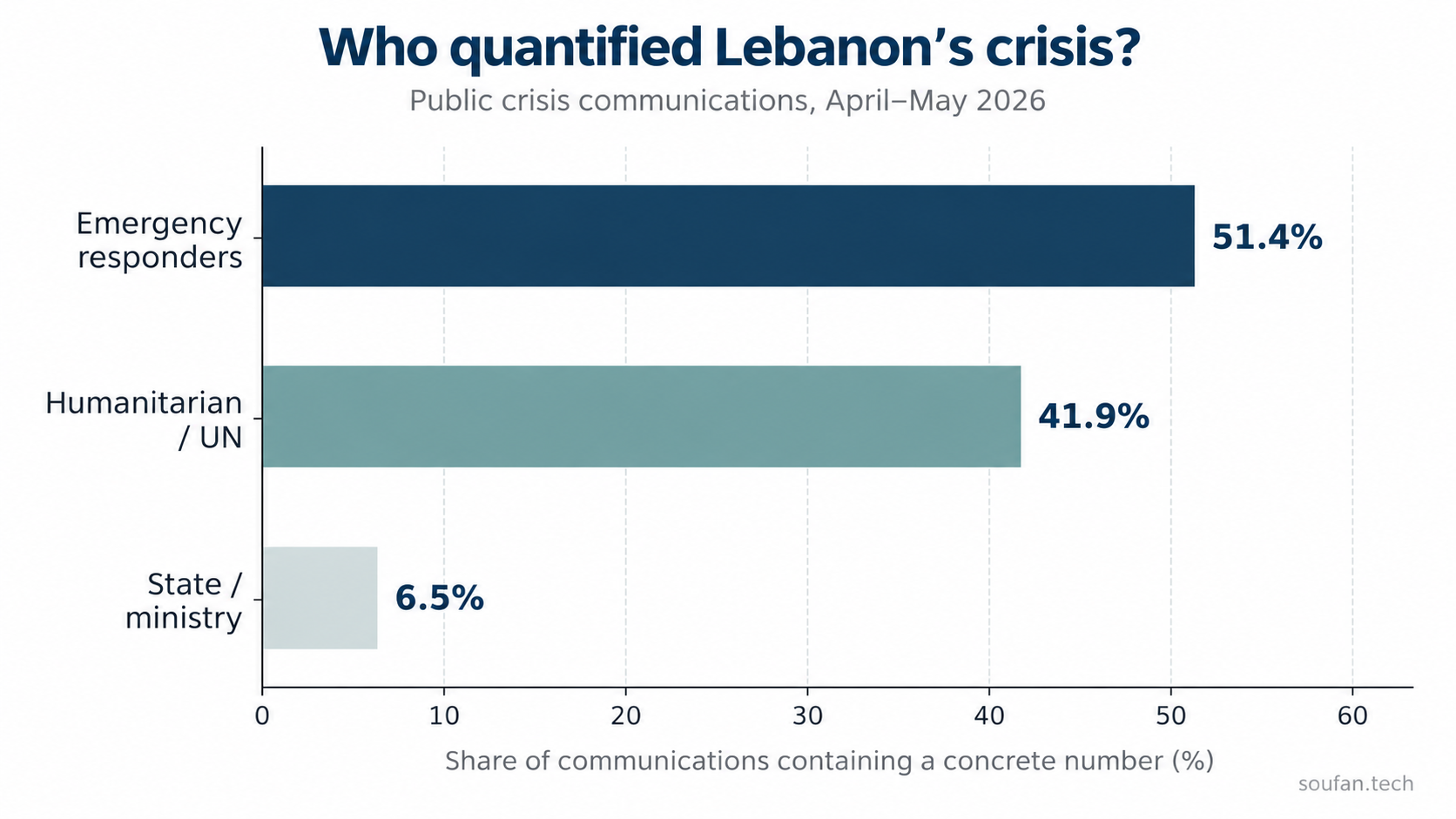
Lebanon’s crisis institutions communicated often during the April–May 2026 escalation. But most of that communication did not include measurable figures. In an analysis of 182 public crisis communication items, 126 items — 69.2% — contained no concrete number. Only 56 items — 30.8% — included one.
The gap was sharpest among state and ministry sources. They were the largest communicators by volume, but only 6.5% of their communications included a concrete number.
In short, Lebanon’s crisis was visible in public communication, but often not measurable.
What Lebanon’s Crisis Communication Numbers Show
The main finding is simple: most public crisis communications did not include a concrete number.
The numbers show that non-quantified communication was not a side pattern. It was the dominant form of public crisis communication in the dataset.
That matters because numbers help the public understand scale. A message that says aid was delivered tells people that something happened. A message that says how much aid was delivered, where it went, and how many families received it gives people a way to judge the response.
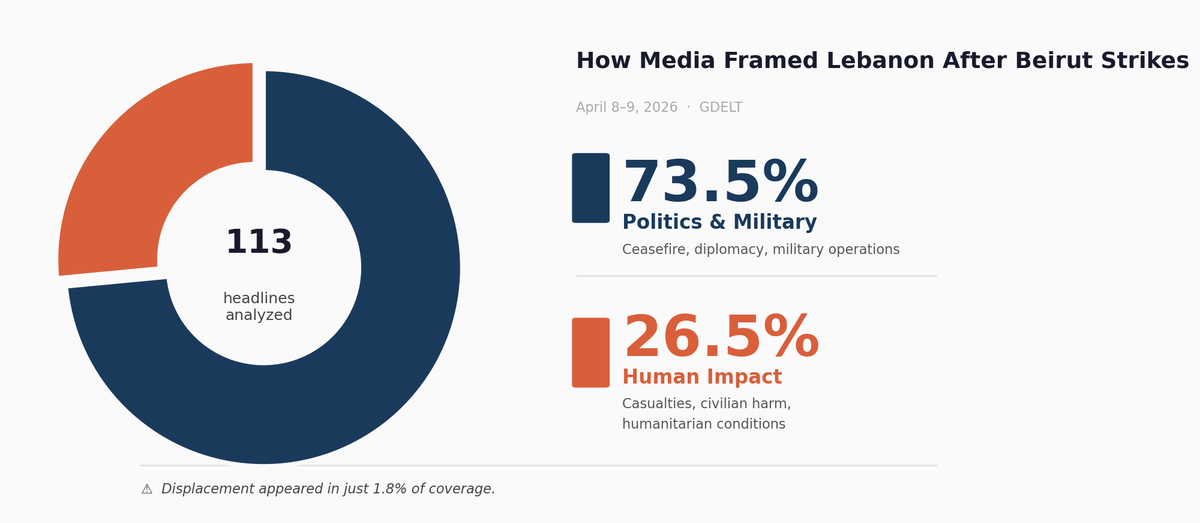
Without figures, crisis communication can show activity without showing scale — a pattern that also appears in my analysis of how Lebanon coverage focused on politics over civilians.
The State/Ministry Quantification Gap
The largest gap appeared among state and ministry sources.
These sources produced 77 items, more than any other actor group. But only 6.5% of their communications included a concrete number.
Emergency responders were much more likely to quantify their updates, with 51.4% of communications containing a number. Humanitarian and UN sources followed at 41.9%.
Which Lebanon Crisis Sources Used Numbers Most?
The highest quantification rates appeared among UNHCR Lebanon, UNICEF Lebanon, and the Lebanese Red Cross.
The middle group included the Lebanese Civil Defense and the Lebanese Army, both of which included numbers in roughly half of their communications.
The lowest rates appeared among WFP Lebanon, the Ministry of Public Health, DRM Lebanon, and the Ministry of Social Affairs.
Source-level results should be read carefully because some sources had small sample sizes. The actor-group pattern is more important.
Why Measurable Crisis Communication Matters
Measurable communication helps answer basic crisis questions:
- How many people were affected?
- How many people were reached?
- Which areas need more support?
- Is the response matching the need?
When public communication lacks numbers, these questions become harder to answer.
This does not mean every post or statement must contain statistics. But when most communications contain no figure at all, the public record becomes weaker.
Conclusion
Lebanon’s April–May 2026 crisis communications were active, but often not measurable. Across 182 items, nearly seven in ten contained no concrete number.
The gap was most serious among state and ministry sources, which produced the largest share of communications but were the least likely to quantify the crisis.
This matters because public crisis communication should help people understand scale, not only signal that institutions are present. Without measurable figures, harm, need, and response become harder to evaluate. This fits a broader pattern in my Lebanon research: public visibility can be high while public understanding remains limited, including in the hidden structure of political discourse on X.
Methodology: How The Lebanon Crisis Communications Were Coded
This analysis reviewed 182 public crisis communication items from Lebanon’s April–May 2026 escalation.
Sources were grouped into three actor categories:
- State/ministry: DRM Lebanon, Ministry of Public Health, Ministry of Social Affairs
- Emergency responder: Lebanese Army, Lebanese Civil Defense, Lebanese Red Cross
- Humanitarian/UN: UNHCR Lebanon, UNICEF Lebanon, WFP Lebanon
Each item was coded for whether it contained at least one concrete measurable figure.
A communication was coded 'Yes' if it included a number related to harm, need, aid, services, operations, infrastructure, time, or response.
A communication was coded 'No' if it used only general language, such as “aid was distributed,” “teams responded,” “urgent needs,” or “several areas were affected.”
Data Limitation: Facebook Sources And Researcher Notes
For Facebook-based sources, coding relied on researcher notes because the cleaned text field did not preserve the full original post text.
This applies to DRM Lebanon, the Ministry of Social Affairs, the Ministry of Public Health, and Lebanese Civil Defense.
The notes are accurate but shorter than the original posts. For that reason, results for those sources should be treated as conservative lower-bound estimates, especially the 0.0% rates for DRM Lebanon and the Ministry of Social Affairs.
X-based and document-based sources were coded from full original text.
Related Research
 Mohamed Soufan
 Mohamed Soufan
 Mohamed Soufan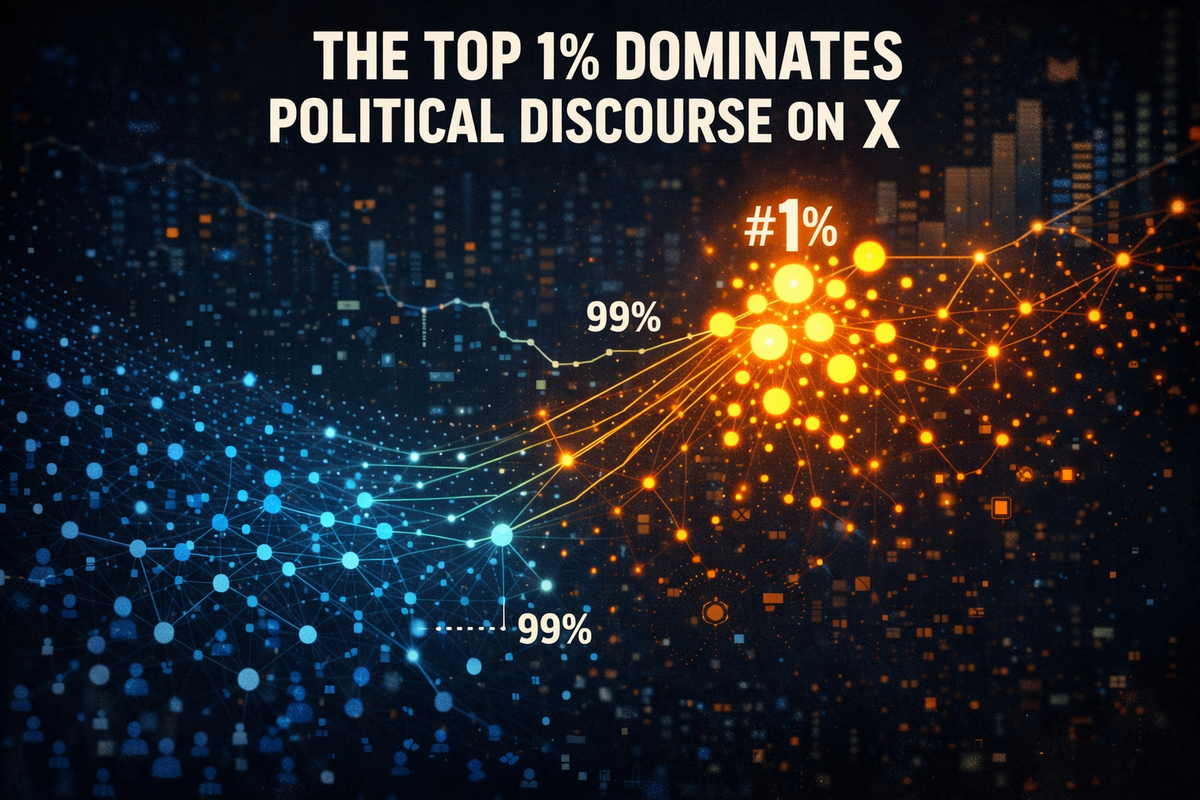
Lebanon’s Crisis Communications Often Lacked Clear Guidance – OpEd
Media & Contact
For media inquiries or interviews about this research, please use the contact page.