Data Briefs
Engagement drops by 95% as posts surge on X about Lebanon
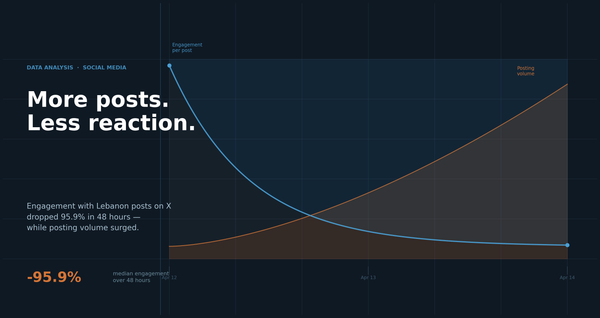
Posts about Lebanon on X surged, but engagement per post fell sharply within 48 hours, dropping by over 95% as volume increased.
Computational Researcher and Software Engineer analyzing large-scale social media data to understand online discourse. Uses data science and computational methods to uncover patterns in digital communication and public debate.

Data Briefs
Posts about Lebanon on X surged, but engagement per post fell sharply within 48 hours, dropping by over 95% as volume increased.
Research
Posts about Lebanon on X surged, but engagement per post fell sharply within 48 hours, dropping by over 95% as volume increased.

Research
94.9% of Lebanon news coverage focused on conflict, but only 36.9% of search demand did. Most searches centered on economy, living, and emigration.
Data Briefs
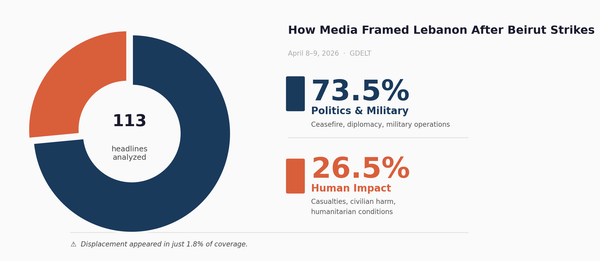
73.5% of media coverage after the Beirut strikes focused on politics, while civilian impact remained limited and displacement was nearly absent.
Research
Analysis of 113 news articles shows coverage emphasized diplomacy and military developments over humanitarian impact following the Beirut strikes.
Data Briefs
Signals of escalation appeared in Lebanon-related posts on X before the ceasefire announcement, preceding developments later reported on the ground.
Data Briefs
Strike reports in Lebanon surged sharply before the April 8 ceasefire announcement, peaking prior to official confirmation and remaining elevated during it.

Research
Analysis of 5,142 posts on X shows strike reports surged before the ceasefire announcement and remained elevated during it.
Data Briefs
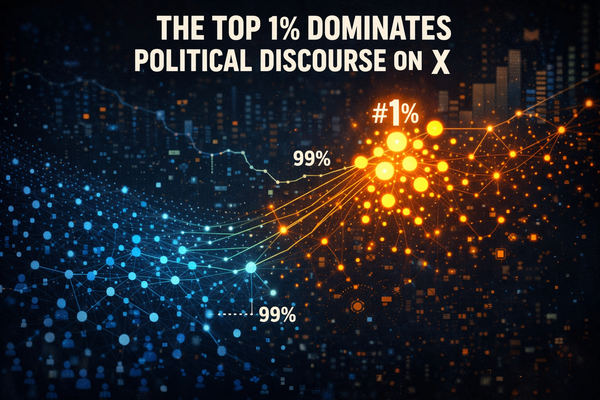
A small minority of users capture most engagement in Hezbollah-related discussions on X, revealing a highly concentrated attention structure.
Research
A study of Arabic-language political discussions on X shows that while thousands participate, attention is highly concentrated—just 1% of users drive over 60% of engagement.
Data Briefs
The Ain Saadeh timeline shows how quickly online discussion developed compared to media coverage.
Data Briefs
Political posts represented only a small share of posts about the Ain Saadeh incident on X, but they received far higher engagement than other types of content.