5% of accounts drove 60% of engagement on X

A data analysis of 1,442 posts on X shows that a small group of accounts drove most engagement in the 48 hours after the Lebanon ceasefire.

Share

In the hours following the Lebanon ceasefire in April 2026, activity on X (formerly Twitter) surged as Arabic-language users shared updates, reactions, and reports from the ground. From ceasefire announcements to reports of violations in southern Lebanon, the platform reflected a fast-moving and highly active information environment. But a closer look at the data shows that this activity did not translate into evenly distributed attention. Instead, engagement concentrated around a small subset of accounts, shaping what users saw and interacted with during the first 48 hours after the ceasefire.

Key finding

💡
Just 5% of accounts drove 60.8% of all engagement on X after the Lebanon ceasefire.

Data

📃
The analysis is based on 1,442 Arabic-language posts collected from X between April 16 and April 18, 2026, covering the 48-hour period following the Lebanon ceasefire announcement. Posts were gathered using ceasefire- and location-related keywords in Arabic. Engagement is measured as the sum of likes, reposts, replies, and quote posts per post.

Full analysis

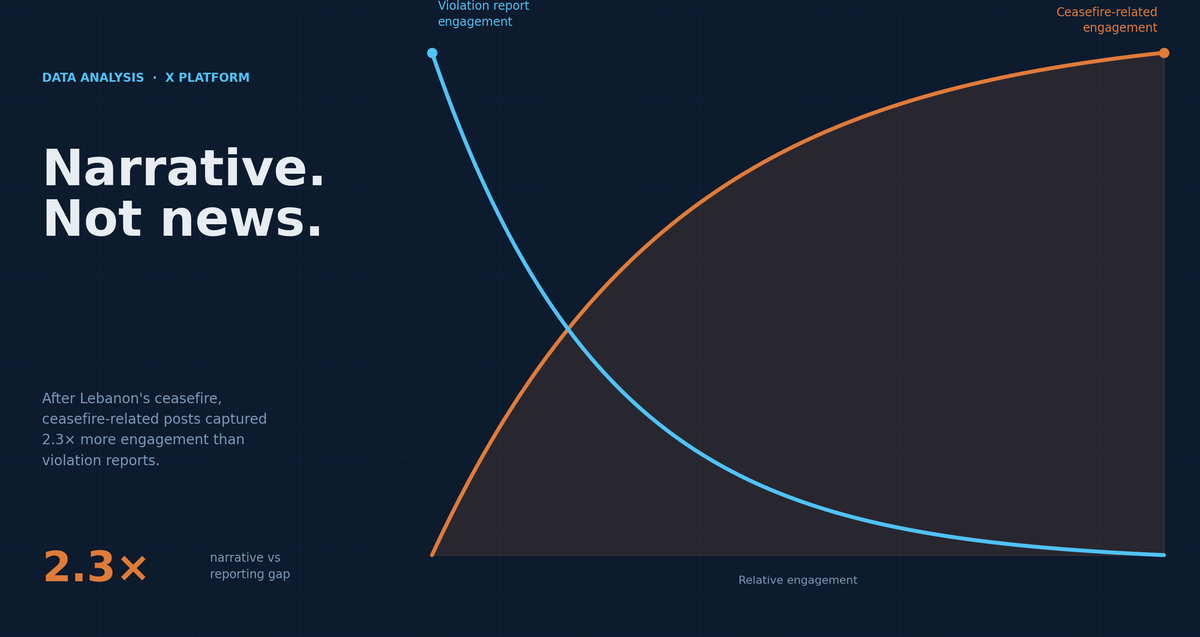
Narratives Beat News on X After Lebanon Ceasefire
A data analysis of 1,442 Arabic-language posts on X shows that after Lebanon’s ceasefire, attention focused on repeated narratives and a small group of accounts, not on ground-level reporting.
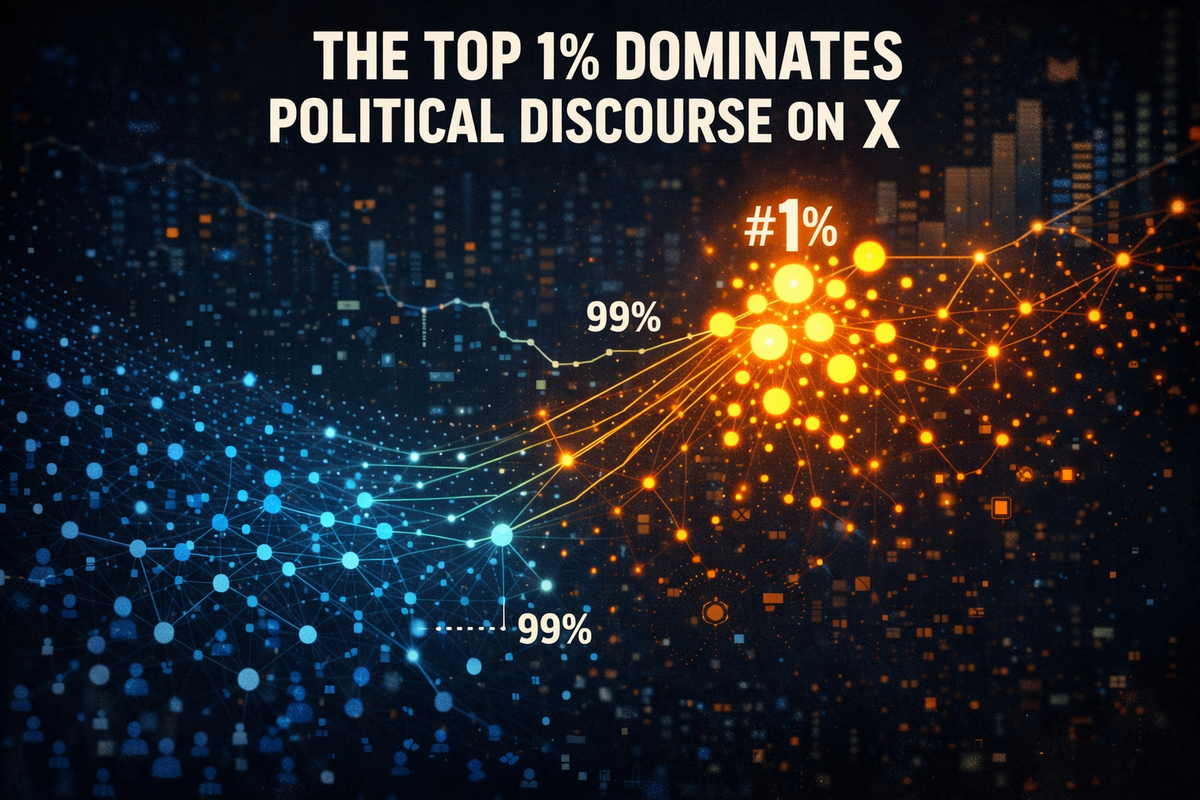
Inside the Hidden Structure of Political Discourse on X
A study of Arabic-language political discussions on X shows that while thousands participate, attention is highly concentrated—just 1% of users drive over 60% of engagement.
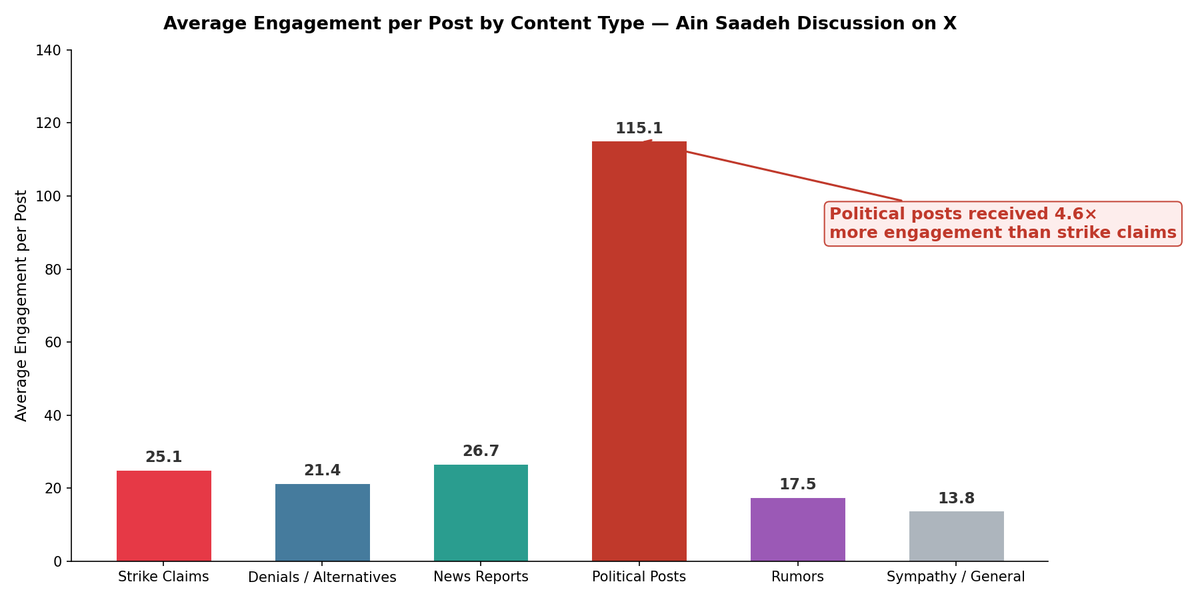
Ain Saadeh on X: Politics Drove Engagement, Not News
After the Ain Saadeh incident, strike claims dominated what people posted on X, but political content dominated what people paid attention to.

Data and Methodology

The full dataset and analysis code are publicly available on GitHub.