Fact-Checked Lebanon Misinformation Was Mostly Real, Not AI
Most fact-checked misinformation in Lebanon’s 2026 conflict used real images or videos with false context, not AI-generated content.

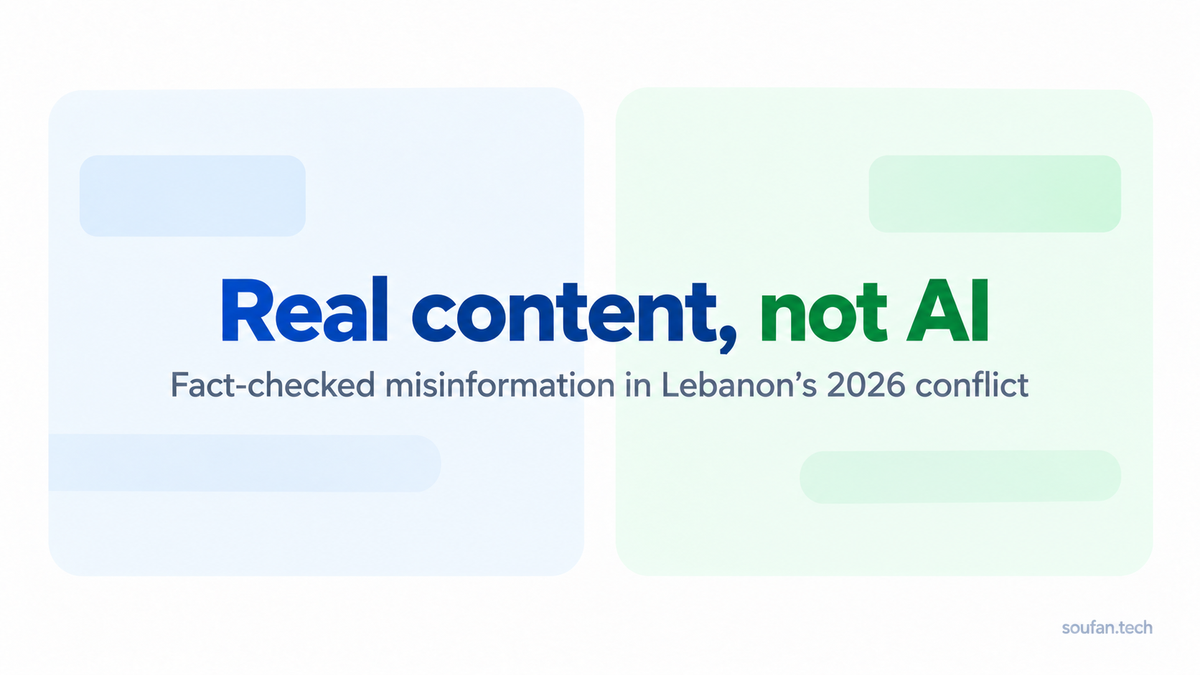
Generative AI has made deepfakes and AI-generated misinformation a central concern in wartime information environments. But in the 2026 Lebanon conflict, the fact-checked misinformation I examined was usually misleading for a simpler reason: real images and videos were being reused with false context.
The study analyzed 142 unique Arabic- and English-language Lebanon misinformation claims fact-checked between March 1 and September 13, 2026. Each claim was classified by the type of manipulation involved.
The result was clear: authentic content used deceptively was far more common than AI-related misinformation.
What the study found
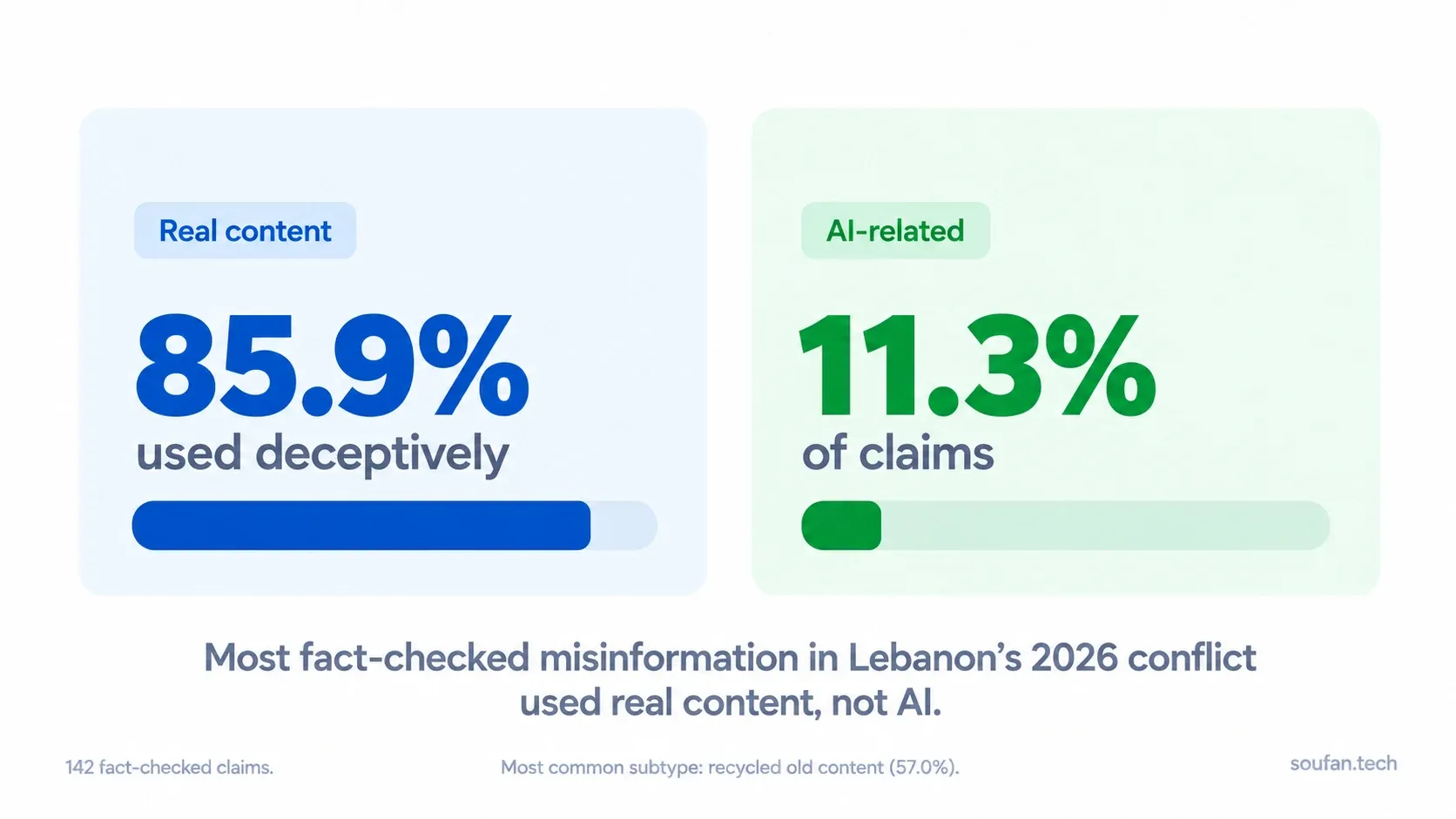
Of the 142 fact-checked claims, 122 (85.9%) involved authentic content used deceptively. The most common pattern was old real footage or imagery recirculated as if it showed a current event: 81 claims, or 57.0% of the corpus. Another 40 claims (28.2%) involved genuine material presented with the wrong location, actor or context. By comparison, 15 claims (10.6%) were AI-generated. The broader AI-related category, which also included AI-manipulated material, accounted for 16 claims (11.3%).
Why the Finding Matters for Verification
Much of the misleading material in the study was real. The problem was not that the image or video had been artificially generated, but that it was presented with the wrong date, location, event or people.
That means verification cannot rely only on detecting AI-generated or manipulated media. It also requires checking where material came from, when it was created, and what it actually shows.
What the Finding Does — and Doesn’t — Show
The study shows that, within this corpus of fact-checked claims, misuse of real content was far more common than misinformation primarily classified as AI-generated or AI-manipulated.
It does not show that AI misinformation is unimportant, or that most misinformation circulating during the conflict followed the same pattern. The dataset covers claims that were professionally fact-checked and captured through the study’s retrieval process.
Full paper
Mohamed Soufan, Authentic-Content Misuse and AI-Related Content in Fact-Checked Misinformation from the 2026 Lebanon Conflict, SSRN, 2026. SSRN Abstract No. 7465862. DOI: 10.2139/ssrn.7465862.
Code and data
The analysis code and supporting research materials are available on GitHub.