AI Shows Different Sources Depending on Your Language
A study of ChatGPT Search, Gemini, Perplexity and Copilot finds that asking the same questions about Lebanon in English or Arabic can lead AI systems to cite very different sources.

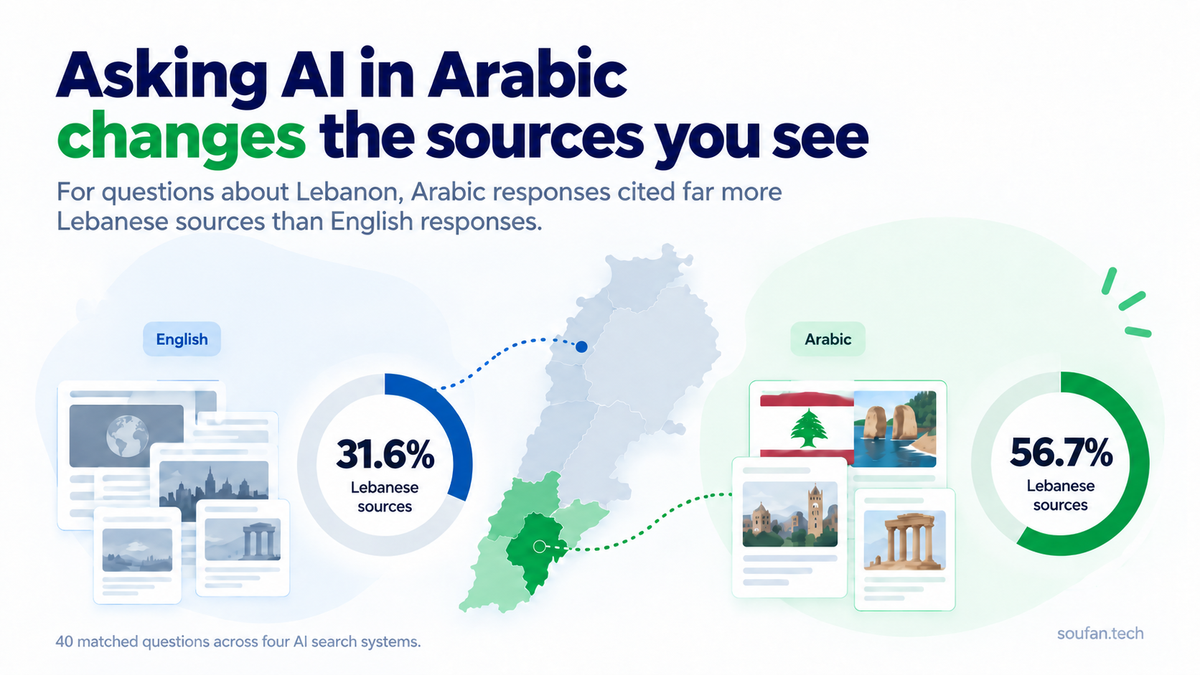
Ask AI the same question about Lebanon in English and Arabic, and the sources it shows can change sharply. Across ChatGPT Search, Gemini Search, Perplexity, and Copilot, Arabic responses cited Lebanese sources far more often than English responses.
A computational study tested 40 matched questions about Lebanon in both languages across the four AI search systems, producing 320 responses. The study then analyzed the sources cited in those responses to see how often Lebanese sources appeared.
In other words, the language you use to ask AI about Lebanon changes which sources it shows you.
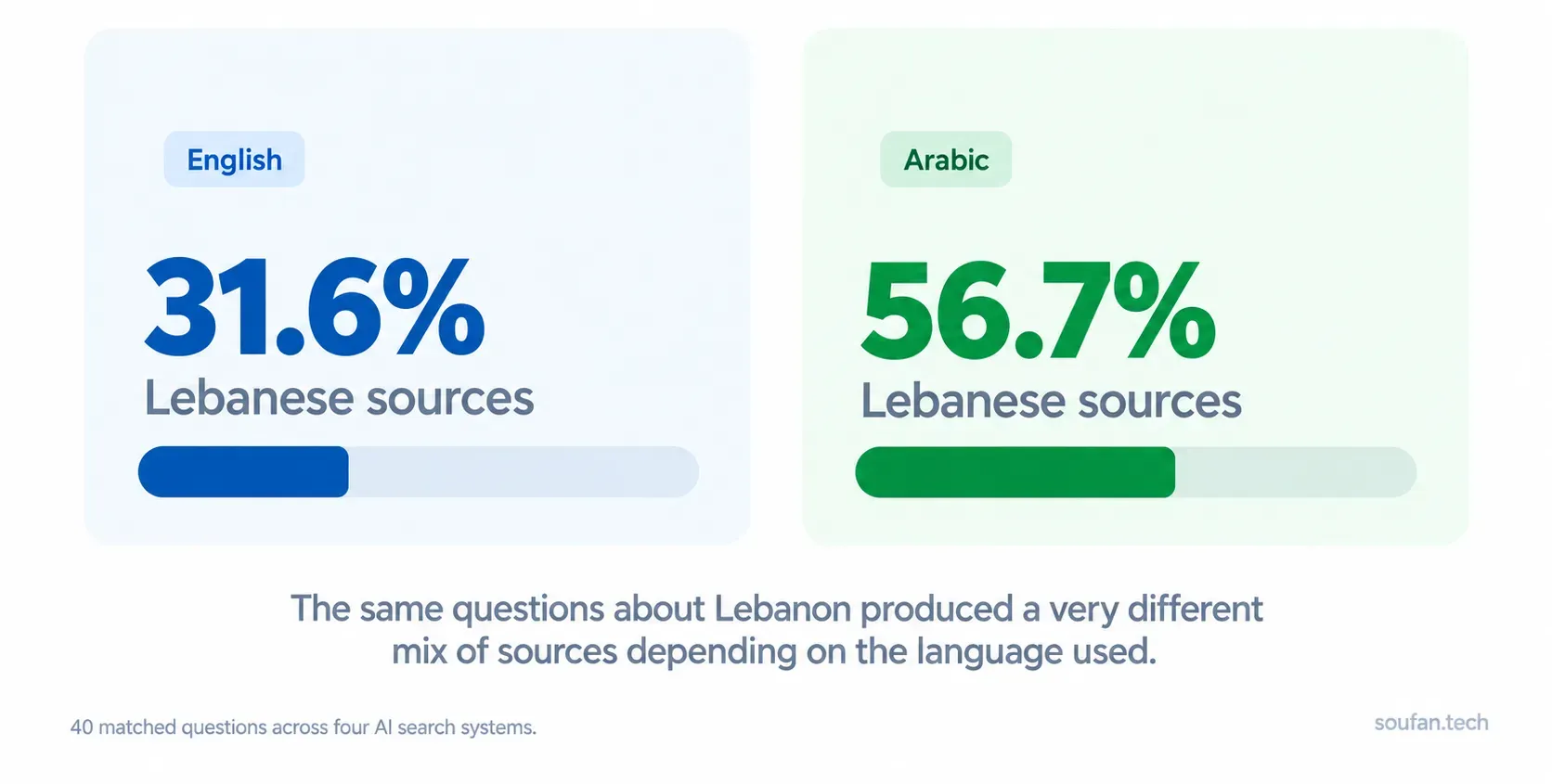
The pattern appeared across all four AI systems. Compared with English, Lebanese-source representation was higher in Arabic by 18.5 percentage points on ChatGPT, 34.8 on Gemini, 26.8 on Perplexity, and 20.4 on Copilot.
The kinds of sources also changed. English answers leaned more on international organizations and reference sites, while Arabic answers leaned more on Lebanese government sources and local news outlets. For example, An-Nahar was among the ten most-cited Lebanese sources in Arabic responses, but not in the English top ten.
The pattern appeared in the same direction across all four AI systems and all eight topic areas.
The 40 questions covered eight areas: economy and business, banking and finance, work and household life, infrastructure and public services, health and education, tourism and culture, environment and natural resources, and society and institutions.
The study captures the behavior of these AI search systems at one point in time and does not determine why the language difference occurred.
Full paper
Mohamed Soufan, Language-Dependent Source Representation in AI Search: A Cross-Platform Audit of Lebanon, 2026.
Analysis
 Mohamed Soufan